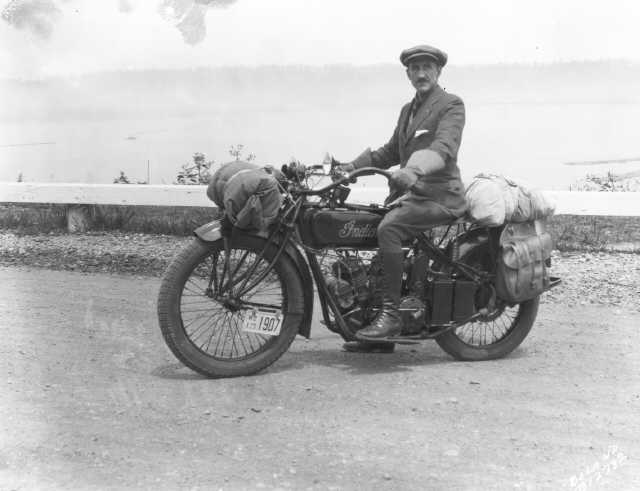
Touring rider at Dash Point on June 15 1925. Note the location of the license plate.
Last time I made a comparison between driving in our December snow storm and riding in the early days, before modern pavement became very common. This took us back to the first decades of the 20th Century. Why start with that sort of stuff for a history blog about the Jolly Rogers Motorcycle Club when the club didn’t start until 1941? The answer is simple. Our first club members didn’t pop up all of a sudden like mushrooms after rain. They created the J.R.M.C. in 41 because they were already bikers and they wanted a south end club because there wasn’t one. This means that they were actively involved in the motorcycle club culture that already existed in the Pacific Northwest and they grew up with families that were friendly to motorcycling. Founders Ken and Lila Bulen were already married and in their 20s when they and Woody Combs and some other graduates from Highline High School started the club. (They took the high school’s pirate mascot and modified it by adding motorcycle goggles to become our J.R.M.C. pirate).
In 1945, the time of the first major event at the old J.R.M.C. track, the riders would have been in their late teens, twenties, thirties and some even older. Someone thirty years old in 1945 would have been born in 1915. A forty year old would have been born in 1905! As children they would have witnessed the early motorcycles on the roads. Older ones would have remembered the incredibly popular board track racing that ended around 1922 and the up and coming dirt track racing and hill climbs that drew the crowds after. Board track racing had been so popular that when it ended it spawned the international sport of short track racing, but that’s another story entirely.
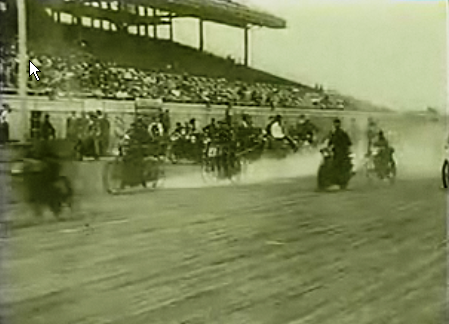
Board track racing in Tacoma around 1914
Children would have attended races and hill climbs with their parents, just as kids do today. They would have heard radio news or read newspaper exploits of various motorcycle daredevils, long-distance record setters and they would have seen plenty of speed cops in solo and sidecar police bikes. Families that owned bikes would have taken their children along for rides and to family picnics as photographic evidence shows.
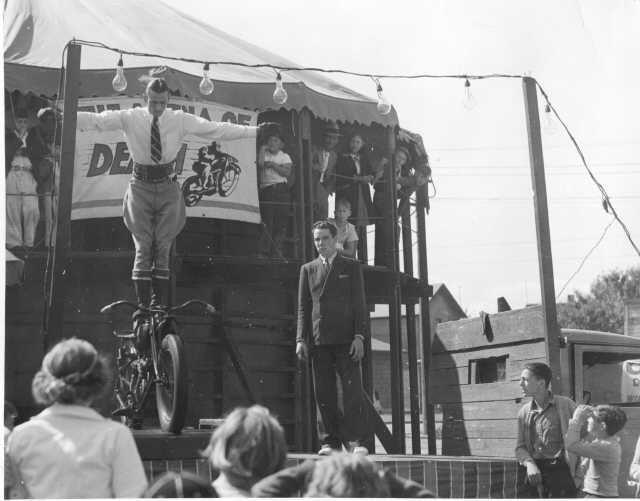
Wall of Death rider at the September 1937 Puyallup Fair
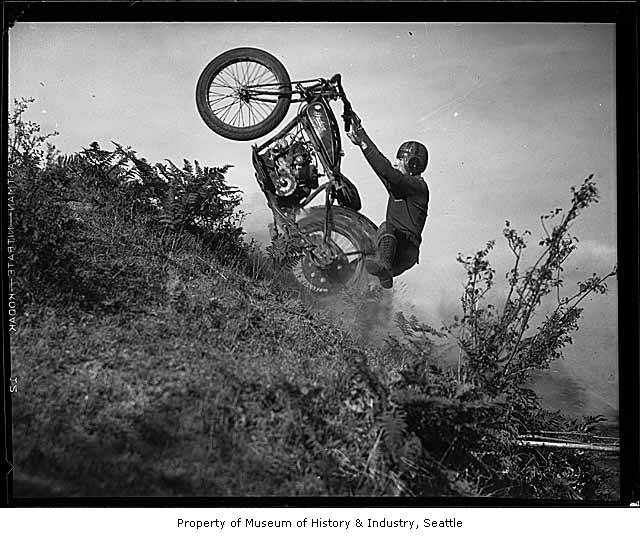
Hill climber in Western Washington January 23 1934
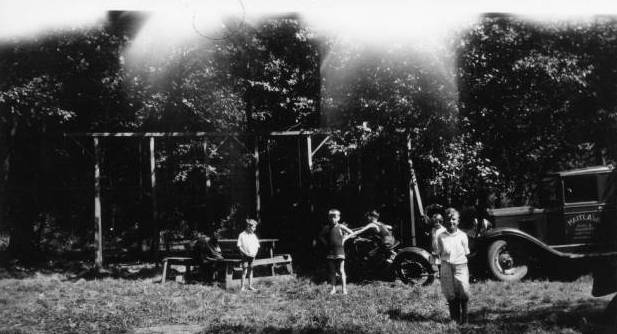
Family picnic at Des Moines, WA in 1930. Are the kids future Jolly Rogers?
Photo credits: The Museum of History and Industry, Seattle and the Tacoma Public Library.
Biker Bone
January 8, 2009